
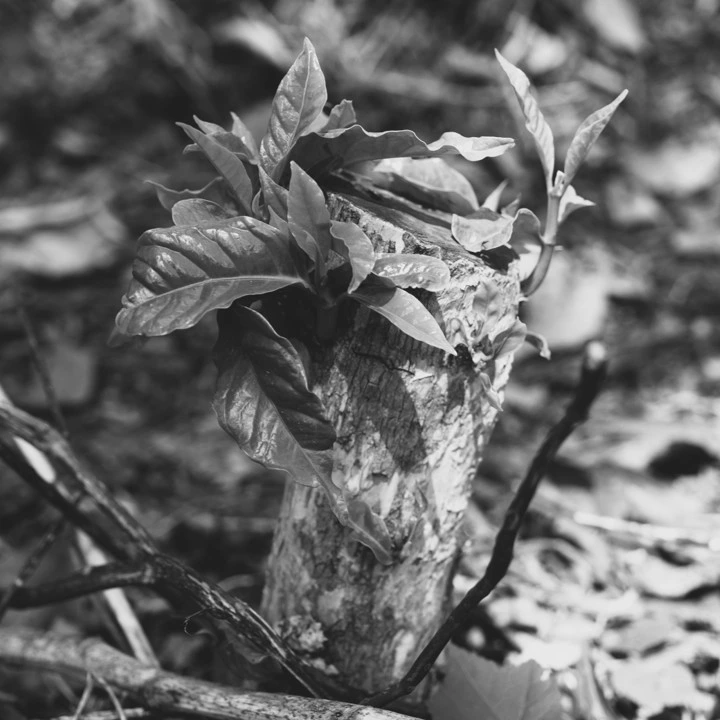

Reliable yield data will inform better decision-making and investments.
IFPRI and EIAR will conduct the first rigorous, multi-year study on the yield and income effects of coffee stumping under real smallholder conditions in Ethiopia — providing the evidence base needed for smarter investments in coffee rehabilitation.
KEY FACTS
WHERE
Ethiopia (Sidama, Oromia)
WHO
WHEN
Feb 2026 – Jul 2027
GOAL
Provide reliable coffee yield and income data to guide investment and policy decisions
REACH
NA
EVALUATION
NA
KEY IMPACT METRIC
Sector uptake
KEY FACTS
WHERE
Ethiopia (Sidama, Oromia)
WHO
WHEN
Feb 2026 – Jul 2027
GOAL
Provide reliable coffee yield and income data to guide investment and policy decisions
REACH
NA
EVALUATION
NA
KEY IMPACT METRIC
Sector uptake
Research Questions
Coffee rehabilitation — primarily through stumping, the cutting back of aging trees to stimulate regrowth — is widely promoted across Ethiopia to rejuvenate old coffee trees. Yet surprisingly little rigorous data exists on how yield evolves after stumping, whether it actually pays off for smallholder farmers, and under what conditions.
This study addresses that gap directly. It will examine the following questions:
- Does stumping meaningfully increase coffee yield — and how do yields evolve over the years following rehabilitation?
- How do effects differ by production system (garden vs. semi-forest) and rehabilitation & renovation method (stumping vs. replanting)?
- What is the cost-effectiveness of stumping? How long does it take farmers to recover their investment — accounting for the income loss during the recovery period?
Research Design
The study builds on an existing foundation: earlier cohorts of farmers exposed to HereWeGrow-funded interventions that promoted stumping in Sidama and Jimma. Researchers will revisit a subset of these households, focusing on plots where stumping took place between 2019 and 2023 — enabling a rare multi-year, longitudinal view of yield recovery.
Across 500 plots, the team will measure both stumped and unstumped trees using green berry measurement — a rigorous and cost-efficient method widely used in agricultural research. In total, 5,000 trees will be measured. Financial returns will be estimated by combining yield data with farmgate prices and application costs.
Outcomes
Results are expected in Q2/Q3 2027 and it will provide rigorous evidence on the yield and income impact of coffee rehabilitation and its implication on total coffee production and export. Specifically, the study will offer:
- Rigorous yield and income trajectories across multiple years post-stumping
- Context-specific recommendations for different regions and production systems
- Quantifiable (social) ROI under real smallholder conditions
The findings will be directly relevant for farmers, governments, investors, and coffee sector actors deciding where and how to invest in farm rehabilitation and renovation at scale. The evidence will help ensure the effective allocation of scarce resources to initiatives that improve the incomes and living standards of smallholder coffee farmers.
What Excites us about this partnership
This study is the first to assess the yield and income effects of stumping rigorously, and specifically under the constraints smallholder farmers actually face: limited access to knowledge, labor, and inputs. By spanning multiple regions, production systems, and years, it will produce the kind of contextualized, actionable evidence that large-scale investment decisions require.
We are also excited to be working with IFPRI and EIAR — a partnership that combines international methodological rigor with agricultural expertise and in-depth context knowledge, giving results the best possible chance of being adopted where it matters.
We look forward to sharing results as they emerge.
RESOURCES
Results will be publicly available – stay tuned!