
published: May 2026

A program that works is a starting point, not a finish line. The question is always: how do we make it work better?
At HereWeGrow, we invest in rigorous impact evaluations to assess the impact and cost-effectiveness of interventions for smallholder coffee farmers. But in some cases, it needs pilots and small studies to test innovations and add-ons to existing programs that increase impact and efficiency. That iterative work is where programs constantly improve — generating more impact per euro invested for our target group.
This article outlines one such process, where TechnoServe as the implementing and Laterite as the research partner tested and embedded stumping incentives into TechnoServe’s Coffee Farm College (CFC) program in Ethiopia. Over three rounds of piloting and testing — each building on the last — the team identified not just whether incentives could increase stumping adoption and improve program cost-effectiveness, but which type of incentive worked best and how to design it for maximum behavior change. The result: incentives are now a standard component of the Coffee Farm College, applied across all TechnoServe coffee programs in Ethiopia.
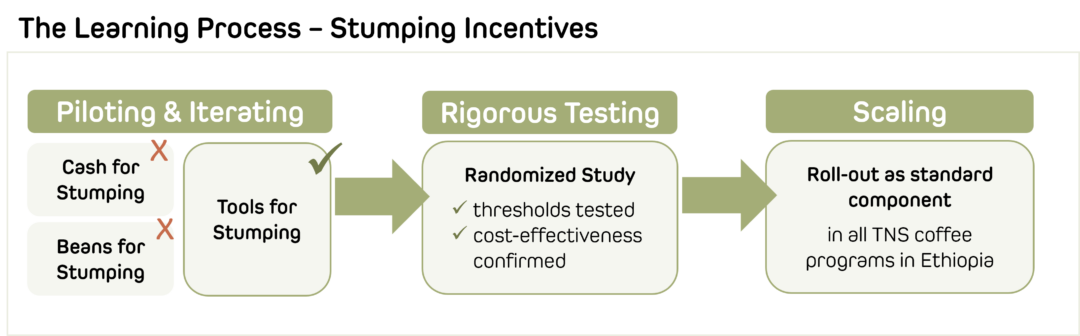
Fig. 1: The Learning Process of Stumping Incentives
The Context: Sidama Coffee Agronomy Program
The Sidama Coffee Agronomy Program aimed to improve coffee productivity and farmer incomes in Ethiopia’s Sidama region by promoting good agronomic practices — most critically, stumping. Implemented by TechnoServe between 2019 and 2023, the program reached 47,759 farm households across five woredas. Read more about the Sidama Coffee Agronomy Program.
Where it started: the need for optimization
In Sidama, 750,000 smallholder farmers depend on coffee as an important income source, yet the large majority earn less than a living income. One of the primary drivers of limited coffee revenues is low yields from aging coffee trees. Stumping — cutting back old, unproductive coffee trees to stimulate fresh growth — is one of the highest-impact agronomy practices available to smallholder coffee farmers in Ethiopia. And yet, even among farmers participating in the training program, adoption remained limited.
The barrier wasn’t knowledge. Farmers understood what stumping was and why it matters. The reason for non-adoption was rational: stumping a tree means it will not produce coffee for one season. For a household managing thin margins and real income uncertainty, that short-term income loss is a significant risk — compounded by limited trust that the technique will perform as expected on their own farm, even after seeing progress on the demonstration plot.
Behavior change that requires absorbing a short-term cost for a long-term gain almost always needs more than knowledge. This was the starting insight that led the team to explore whether a targeted incentive could bridge that gap — not as a standalone program, but as an additional layer on top of the existing CFC delivery model.

Fig. 2: Coffee trees stumping procedure (Source: TechnoServe Training Manual)
The Piloting Phase: From Cash and Beans to Tools
Laterite, as our research partner, conducted key informant interviews (KII) with TechnoServe staff and government representatives to identify options for incentives. This is how the first round of piloting started.
Testing began with the most intuitive options: a cash payment per stumped tree was tested against bean seeds which could be used for intercropping on stumped coffee fields. Run across three kebeles — small administrative units in Ethiopia — with training-only comparison areas, the first pilot produced a directional finding: both incentive types lifted adoption above training-only areas, with cash significantly outperforming beans.
However, qualitative research revealed that local government partners — critical for long-term program sustainability — raised concerns about the practicability of cash at scale. That feedback required iteration and provoked the question: was there a more durable and accepted incentive type that would work equally well?
A second pilot tested agricultural tools across three different packages. The finding: tools performed better than beans but were not as effective as cash in increasing stumping adoption rates. However, they lead to a slightly higher average number of stumped trees per household. In addition, farmers consistently reported that access to quality tools was a genuine constraint. The tool incentive addressed that gap beyond its purely monetary value.
Although less effective than cash, tool-based incentives proved far more acceptable to government partners, clearing the path toward sustainable integration into the program.

Fig. 3 & 4: Share of households who stumped (stumping adoption rate) and average number of stumped trees across pilots
(Source: Pilot 1 Report, Pilot 2 Report)
Note: Given the study design, results across pilot and non-pilot areas cannot be directly compared. The findings are treated as directional signals rather than definitive evidence.
Two rounds of piloting had delivered a clear direction: incentives enhance adoption, and tools are a suitable vehicle. But the pilots had limited scope and lacked causal attribution. Rigorous evidence to validate implementation design options, cost-effectiveness, and scalability was still needed before committing to a full rollout.
The Randomized Study: Proving Cost-Effectiveness
With tools established as the preferred incentive type, the design question shifted: at what threshold should the incentive kick in? How many trees does a farmer need to stump to qualify for a tool package, balancing impact with a cost-efficient roll-out?
Set the threshold too low, and the incentive is poorly targeted, resulting in tool costs exceeding impact. Set it too high, and farmers — particularly those with smaller farms or greater risk aversion — may disengage entirely rather than chase a goal that feels out of reach. Finding the right level requires more than intuition.
A randomized study, implemented by Laterite, was designed with four treatment arms, each testing a different threshold configuration, alongside a control group receiving standard CFC training only. The study ran across four woredas and 49 kebeles — embedded within a running program cohort to also test operational scalability in real-world conditions.
The results confirmed the pilot signals and added important precision. All four treatment arms outperformed the control, but only groups 1 and 2 — those with lower and more achievable thresholds — produced statistically significant results. Farmers responded to ambitious but reachable goals. When the bar felt too high, many opted out entirely — an overly ambitious threshold didn’t just fail to motivate extra effort, it suppressed stumping activity in general.
The cost-effectiveness analysis reinforced the conclusion: the most impactful treatment group was also the most cost-effective. The additional investment in incentives generated additional impact that justified the cost — making the case for integration into the core program, not as an optional extra, but as a standard component.

Fig. 5: Average stumping rate in treatment arms and control (Source: Tools for Stumping Report)
Note: Treatment groups received tool incentives at different tree threshold configurations; the control group received training only. Statistically significant effects were detected in groups with 100 trees and 150 trees.
One finding deserves honest acknowledgment: overall adoption rates and intensity, while improved by incentives, remained modest across all groups. Also, the majority of stumping came from farmers who had stumped before — new, first-time adoption was present but limited. Although incentives moved the needle, they did not solve the full behavior change challenge. That part needs further exploration.
The Result: From Pilot to Standard Practice
The stumping incentive approach — refined through two rounds of pilots and one large-scale randomized study — is now embedded in TechnoServe’s core delivery model and applied across all of their coffee agronomy programs in Ethiopia, including the HereWeGrow follow-up project in Jimma. It is no longer an experiment. It is the way the program works — with stumping adoption rates of over 60% in some regions.
That transition took time, evidence, and a genuine willingness to adapt to results and stakeholder feedback. It required resisting the temptation to scale before the evidence was ready. And it produced something durable: a tested, cost-effective component that other programs can build on.
What This Means Beyond One Program
- The lesson isn’t specific to stumping or to Ethiopia. When farmers are asked to absorb a short-term cost for a long-term gain, training alone is rarely enough. A well-designed incentive — matched to the real constraints farmers face, calibrated to a threshold they can actually reach, and acceptable to the local partners who will sustain it — can meaningfully shift behavior and improve program cost-effectiveness.
- The process matters as much as the finding. Directional pilots build a case. Randomized studies provide the rigor needed to commit. And after each step, there needs to be the willingness to discontinue what doesn’t work and to iterate. That sequence — test, measure, learn, decide — is one we think more programs should be willing to invest in.

Optimization is a lot of work. But it is required to make sure that over time, every dollar spent generates higher impact for farmers.
Resources
To dig deeper, download the Pilot Reports:
Want to continue the journey? Read about the outcomes of the follow-up Coffee Farm College in Jimma and how results varied between regions in this article.
This article is part of HereWeGrow’s learning series, sharing evidence and insights from our portfolio in Ethiopia and Uganda. Get in contact if you would like to share feedback or thoughts for discussion!